
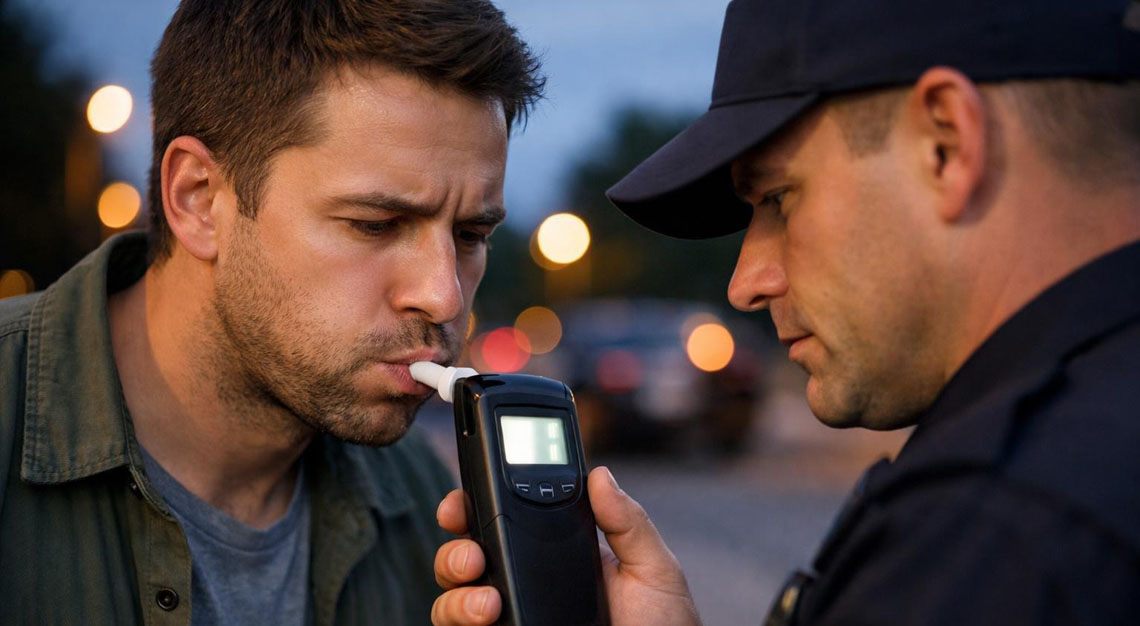
What Can Cause a False Positive Breathalyzer Test in Arizona?
Thousands of people get arrested for DUI in Arizona every year. With so many cases, mistakes happen when police test drivers for alcohol. Breathalyzer tests can show that someone has been drinking when they actually haven't.
These incorrect results are called false positives. They can lead to unfair arrests and serious legal problems for drivers who did nothing wrong. Understanding what causes these errors matters if you want to protect yourself or challenge a test result that doesn't seem right.
How Do Police Officers Determine Drunk Driving?
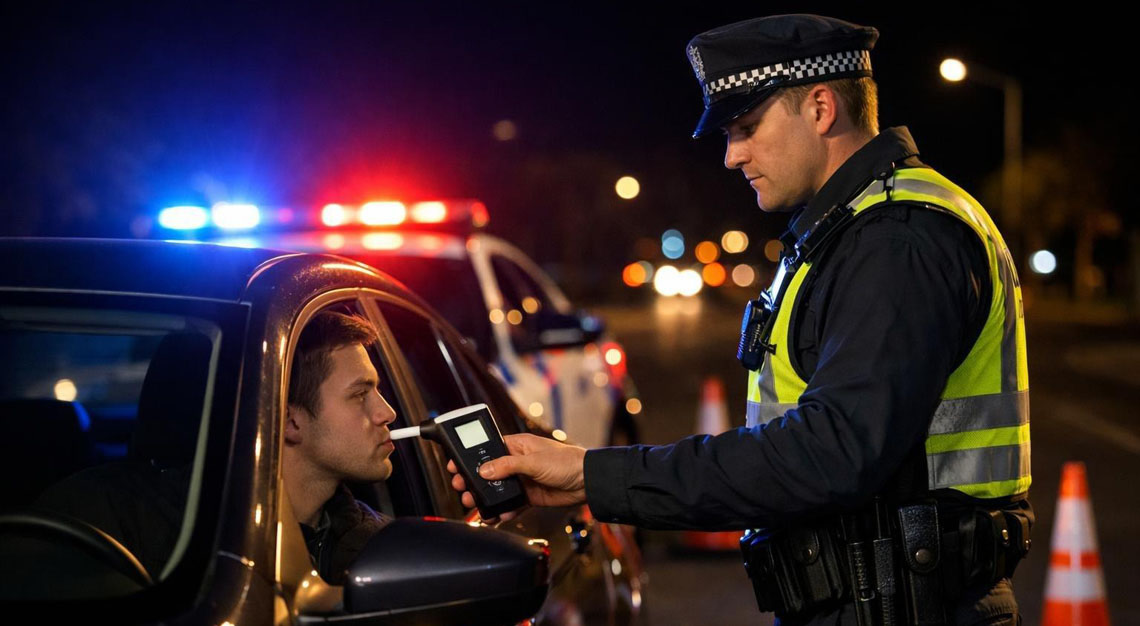
When police pull you over for suspected drunk driving, they use specific methods to check if you are impaired. Officers rely on two main testing approaches to make this determination.
The first method involves physical tasks that evaluate your ability to perform basic actions. You may be asked to stand on one leg to check your balance. Another common task requires you to walk in a straight line and turn around to test coordination. Officers also look at your eye movements through a horizontal gaze test to see how well you can focus attention on multiple things at once.
The second method uses a device that measures alcohol levels through your breath sample. This breathalyzer reading shows your blood alcohol concentration. The test results help officers decide if you should face DUI or DWI charges. A reading at or above the legal limit of .08 will likely lead to an arrest.
Do You Have to Take a Breathalyzer Test in Arizona?
You are not legally required to take a breathalyzer test in Arizona. You have the right to refuse it. However, refusing the test is not a smart choice.
Arizona operates under an implied consent law. This means that when you get your driver's license, you automatically agree to take a breath, blood, or urine test if an officer lawfully arrests you for DUI. Refusing the test does not stop an officer from arresting you. The officer can still use other evidence to arrest you for driving under the influence.
Refusing a breathalyzer test comes with serious penalties:
- First refusal: Your license gets suspended for 1 year
- Second refusal within 7 years: Your license gets suspended for 2 years
- Third refusal within 7 years: Your license gets suspended for 2 years
These penalties apply even if you were not actually intoxicated. The suspension happens because you refused the test, not because you were drunk.
Breathalyzer Test Readings
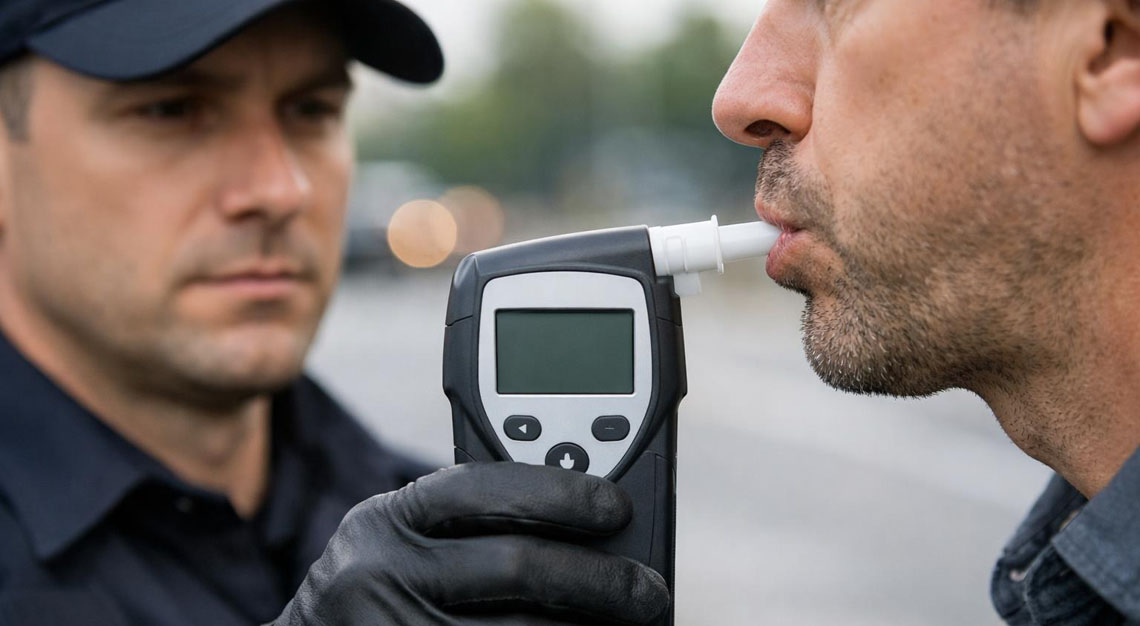
Police officers use a breathalyzer to check if you have a blood alcohol concentration above the legal limit of 0.08%. The device measures the amount of alcohol in your breath to estimate your BAC.
If your BAC exceeds 0.08%, you face DUI charges with severity based on the reading. A standard DUI involves a BAC between 0.08% and 0.14%. Commercial drivers have a lower threshold at 0.04%.
Higher readings lead to more serious charges. An extreme DUI occurs when your BAC falls between 0.15% and 0.19%. A super extreme DUI applies to readings of 0.20% or higher.
Important to Know:
- Breathalyzer devices can produce inaccurate results
- False breathalyzer readings happen more often than many people realize
- An incorrect BAC measurement can lead to wrongful charges
These testing errors create potential defenses if you face DUI charges. The device may have registered alcohol that wasn't actually in your system or shown a higher level than your actual BAC.
What Can Lead to Inaccurate Breathalyzer Results
Breathalyzer devices can show incorrect readings even when you haven't consumed alcohol or when your actual blood alcohol level is lower than the test indicates. Understanding what triggers these errors is important if you face DUI charges.
Equipment Problems
Breathalyzers need regular maintenance to work correctly. When devices aren't calibrated properly, they produce unreliable results. Testing equipment can also pick up chemical fumes from the surrounding environment, which affects accuracy.
Mouth Alcohol Issues
One major problem is residual mouth alcohol. This happens when alcohol stays in your mouth instead of coming from your lungs. The device can't tell the difference between the two sources. You might have mouth alcohol from using breath sprays, mouthwash, or other products containing alcohol. These items leave alcohol residue that triggers a false positive breathalyzer reading.
Medical Conditions
Certain health problems cause misleading test results. Acid reflux, GERD, and heartburn push stomach acid into your throat and mouth. This creates mouth alcohol that wasn't there from drinking. Your diet also matters. People who eat very few carbs or follow keto diets produce acetone in their breath. Breathalyzers sometimes read acetone as alcohol.
Timing and Other Factors
Tests given within 15 minutes of your last drink show inflated numbers. Your body needs time to process alcohol. If you vomit before testing, alcohol residue in your mouth will cause higher readings. Some medications increase acid in your body, which leads to the same mouth alcohol problem described above.
The testing officer's training level and how they use the device also impacts results.
Contact the criminal defense team at (602) 900-9891 to schedule your complimentary consultation.


