
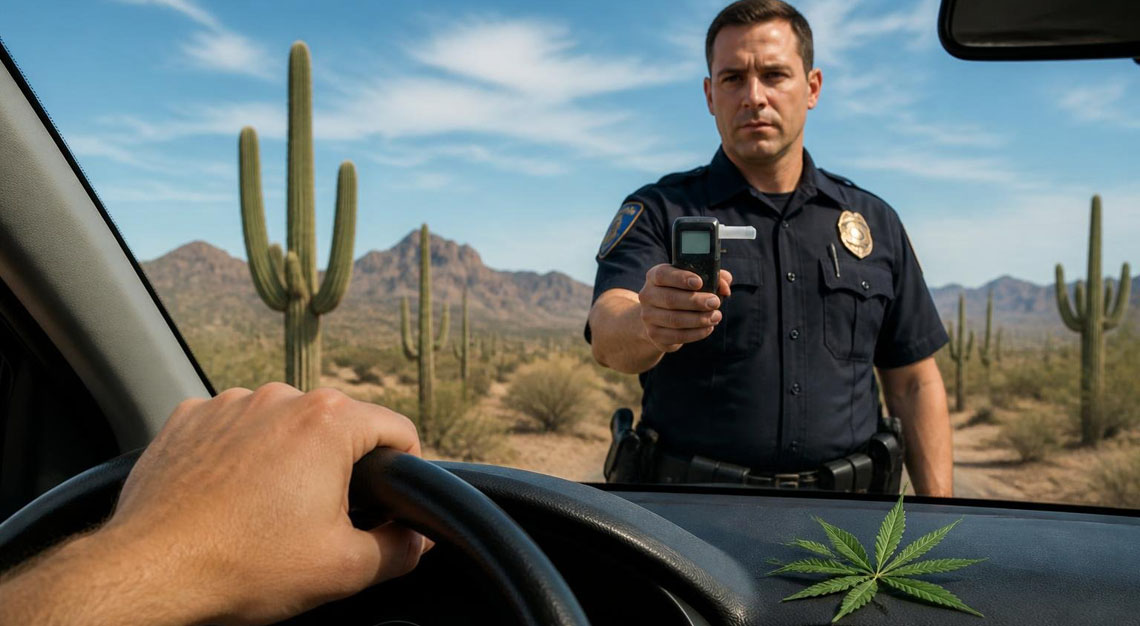
Can You Get a DUI for Marijuana in Arizona?
Arizona takes impaired driving very seriously and enforces some of the toughest laws in the country. While Proposition 207 made recreational marijuana legal for adults, driving under the influence of marijuana remains illegal and can result in serious criminal charges.
You can be arrested for a marijuana DUI if a police officer believes you are impaired while driving. Arizona marijuana DUI laws still apply even though recreational use is now permitted. Driving under the influence of marijuana affects your ability to react quickly and safely on the road, putting yourself and others at risk. If you are stopped and found to be impaired to the slightest degree by marijuana or any other drug, you will face significant penalties that can impact your life.
How Proposition 207 Changed Marijuana DUI in Arizona

Proposition 207 became law in late 2020. It allows adults 21 and older to use marijuana for recreational purposes. This works like the laws around alcohol for adults.
You can still face a DUI charge if you drive with marijuana in your system. The law does not allow you to drive while impaired by marijuana. Even though recreational use is legal, driving under the influence remains illegal.

Key points about marijuana DUI:
- You must be 21 or older to legally use marijuana
- Using marijuana is legal, but driving while impaired is not
- Officers can arrest you if marijuana affects your driving ability
- Having marijuana in your system while driving can lead to charges
The Arizona Medical Marijuana Act still applies to cardholders. If you have an Arizona medical marijuana card, the same driving rules apply to you.
How Police Conduct Testing for Marijuana DUI
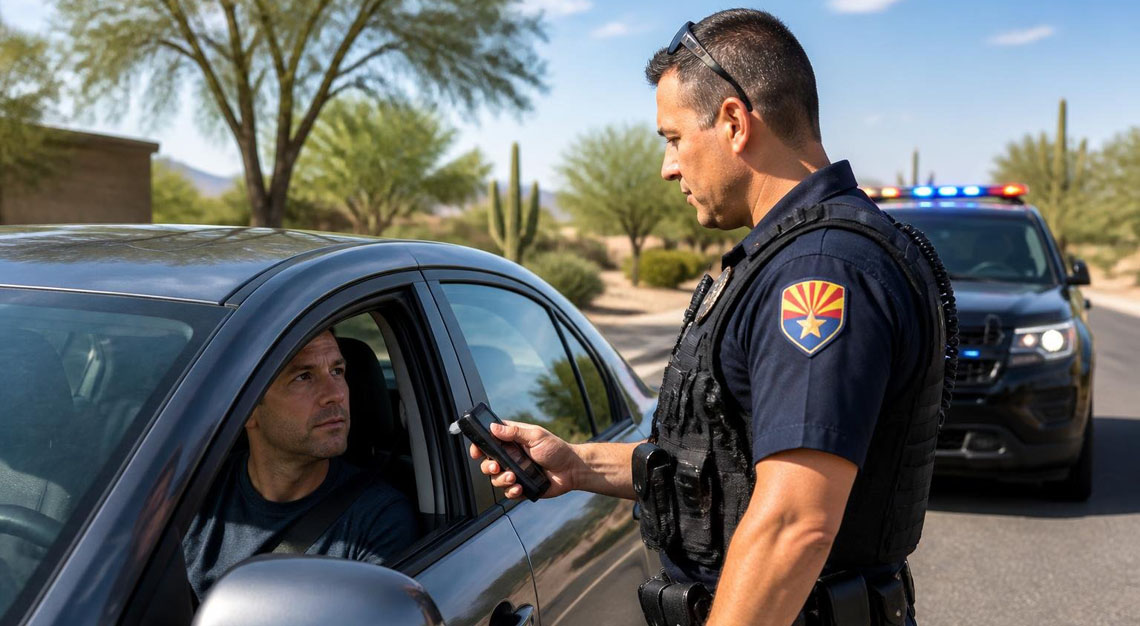
Roadside Questioning by Officers
When an officer pulls you over for suspected impairment, they will first request your driver's license, vehicle registration, and insurance documentation. During this initial interaction, the officer watches for signs of impairment. They listen to your speech patterns to detect if you are slurring words. They also look inside your vehicle for open containers, drug-related items, or smell marijuana odor.
If the officer detects any indicators that suggest impairment, they will proceed with additional testing methods.
Physical Coordination Tests
Officers may ask you to perform physical coordination tests if they suspect impairment. These tests check your balance and ability to follow instructions. Common tests include:
- Horizontal gaze nystagmus: The officer watches your eyes as you track a moving object
- Walk-and-turn: You must walk in a straight line, turn, and walk back
- One-leg stand: You balance on one foot while counting
These field sobriety tests are not always accurate. You have the legal right to refuse these tests.
A drug recognition expert may be called to the scene to conduct a more detailed evaluation if standard tests are inconclusive.

Breath Analysis Device
Officers often use a breath analysis device to check for alcohol. This device measures your breath to detect alcohol content. However, this test cannot detect marijuana or other drugs in your system. It only works for alcohol detection.
Laboratory Sample Analysis
Blood and urine tests provide the most reliable way to detect drug presence. These tests can identify THC metabolites and active THC in your system. Officers trained in blood collection or medical professionals must collect these samples. The samples go to a laboratory for analysis.
This testing method detects THC impairment more accurately than other methods. However, the process takes more time, and officers will transport you to a medical facility or station for sample collection.
Penalties for Marijuana DUI Charges in Arizona
A first marijuana DUI offense under A.R.S. 28-1381 is classified as a misdemeanor. You could face 1 to 10 days in jail and have your driver's license suspended for up to 90 days.
The court will require you to complete drug screening, education, counseling, or treatment programs. You will also need to pay fines and fees. Probation or community service may be part of your sentence.
Second Offense Marijuana DUI Carries Harsher Misdemeanor Penalties
Your second marijuana DUI under A.R.S. 28-1381(a)(1) or A.R.S. 28-1381(a)(3) remains a misdemeanor but brings stricter consequences. The minimum jail time increases to three months, with at least 30 days served consecutively.
Your driver's license will be revoked for one year. The court mandates drug education, screening, and counseling programs. You will face additional fines and fees, plus probation and community service requirements.
Third Marijuana DUI Within Seven Years Becomes a Felony Charge
A third offense escalates to an aggravated DUI, which is a felony. You will serve a minimum of four months in prison.
Additional convictions result in eight months of prison time. Your driver's license gets revoked for three years. The state may seize your vehicle permanently. You must complete drug education, counseling, or treatment programs while facing parole, probation, and community service obligations.
Getting Help With Marijuana DUI Charges
Facing charges for driving while impaired by cannabis requires skilled legal representation. A marijuana dui attorney understands how to challenge evidence and question testing methods that may not accurately show impairment.
An arizona marijuana dui attorney can review your case to find possible defenses. They know how to examine if police followed proper procedures during your stop and arrest. They also understand how Arizona's laws apply to your specific situation.
Marijuana dui defense lawyers work to reduce charges or get them dismissed when possible. They can negotiate with prosecutors and represent you in court. Having legal help gives you the best chance at protecting your driving rights and avoiding harsh penalties.
Contact a criminal defense lawyer who handles cannabis-related DUI cases to discuss your options. Most attorneys offer free consultations to review the facts of your arrest.
A DUI attorney can help you by:
- Explaining your legal rights and options
- Building a strong defense for your case
- Navigating the court system on your behalf
- Working to reduce penalties or get charges dismissed
Having legal help makes a big difference. Your lawyer will answer your questions and guide you through each step of the process.
Contact the criminal defense team at (602) 900-9891 to schedule your complimentary consultation.


